

Exploring Chemical Elements
*This course is intended for lower elementary students
Class Schedule
Tuesdays 6:30-7:20 pm PST
January 12, January 19, January 26, February 2, February 9, February 16
OR
Saturdays 9:00-9:50 am PST
January 9, January 16, January 23, January 30, February 6, February 13
Note: Classes are listed in PST, click below to convert time to your time zone.
Course Overview
Have you ever wondered why salt dissolves in water, while oil stubbornly floats on top? Why ice cubes float in your glass instead of sinking? Or what actually happens inside the oven if you forget the baking soda in a batch of cookies?
In this hands-on course, we’re going to pull back the curtain on the wonderful world of chemistry—using the best laboratory available: your own kitchen. Rather than just memorizing formulas, students will explore the foundational principles of matter, atomic structure, and molecular interactions by watching real-world chemical reactions unfold right before their eyes.
How the Class Works
Each week, we will dive into a new core chemistry concept—ranging from states of matter and density to acids, bases, and chemical leavening. Class time centers on live, guided demonstrations where students predict outcomes, observe reactions in real time, and break down the "why" behind what they see. On select weeks, students will also have the opportunity to participate side-by-side from home using safe, common household and pantry ingredients (an optional supply list will be provided in advance).
Student Learning Outcomes
By the end of this course, students will be able to:
- Identify and compare properties of matter: Understand states of matter, density, solubility, and the difference between physical changes (like melting) and chemical reactions (like baking).
- Navigate the building blocks of chemistry: Read the basic layout of the periodic table and recognize how common elements bond to form everyday compounds like water ($H_2O$), table salt ($NaCl$), and baking soda ($NaHCO_3$).
- Apply the scientific method through observation: Form hypotheses, track variables, and explain the molecular causes behind everyday kitchen phenomena—such as emulsions, crystallization, and acid-base reactions.
- Connect classroom science to daily life: View cooking, baking, and household materials through a scientific lens with confidence and curiosity.
Student Experience

Pattern Seeker

Researcher

Scientist
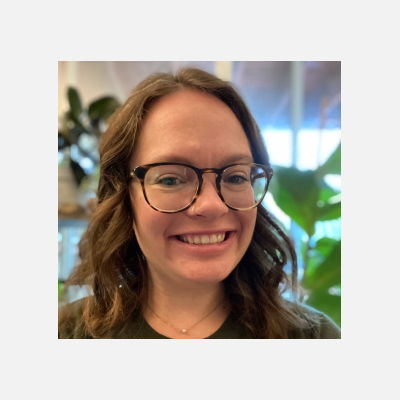
Your Teacher: Lindsey Roberts
Lindsey Roberts has worked as a teacher in California for over 8 years. She has a Bachelor’s in Zoology from Colorado State University, a background in marine biology, and a Masters of Arts in Education from the University of San Francisco. Her experience spans from working with animals, conducting scientific research, and classroom teaching at a public charter school in grades k-8. She has a passion for science, math, and fostering curiosity. She has taught a wide range of ability levels including gifted students. Lindsey enjoys creating project based learning units connecting multiple subject matters in a way for students to better understand. In addition to working at Cresconova, she currently operates Rooted in STEM Education, (rootedinstemeducation.com) a private tutoring business. Her clients are both international and domestic and many of her current students identify as gifted. They respond to her high level of engagement and deep content knowledge. She is thrilled to share her passions of animals, science, and math with Cresconova students!